
Cell Phone Forensics for Criminal Defense Using Magnet AXIOM and Cellebrite
5/20/20264 min read
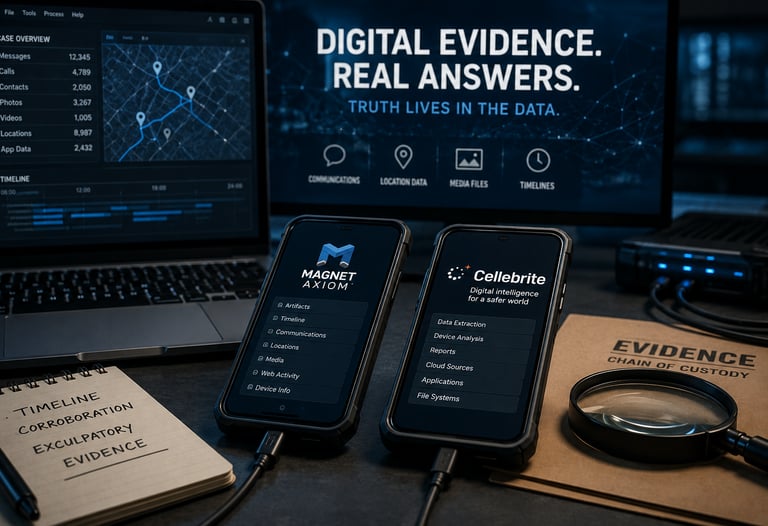

Magnet AXIOM and Cellebrite in Criminal Defense Investigations
In major criminal defense cases, the truth often lives inside digital artifacts. Messages, call logs, location records, app data, media files, and deleted fragments can prove or disprove timelines, expose alternative suspects, and challenge the reliability of witness statements. Two of the most widely used platforms for lawful mobile device forensics are Magnet AXIOM and Cellebrite. Through PMI’s strategic partners, PMI can support defense teams with access to both platforms when the case facts justify a full digital forensic review.
What these tools are and why they matter
Magnet AXIOM and Cellebrite are forensic solutions used to collect, process, and analyze data from mobile devices and related sources. In plain terms, they help qualified forensic examiners extract and interpret evidentiary data in a repeatable, documented way that supports court scrutiny. These platforms can be critical when a case turns on questions like who communicated with whom, when a device was active, where a person was likely located, what was searched, and whether data was altered, deleted, or misinterpreted.
PMI’s capability through strategic partners
PMI works with vetted strategic partners who maintain the appropriate forensic infrastructure and expertise to operate these tools in authorized matters. This partnership model allows PMI to support complex defense investigations that require forensic-grade workflows, specialized reporting, and testifiable findings when needed. It also means PMI can coordinate the investigative strategy across divisions, connecting digital findings to field work, OSINT corroboration, and timeline reconstruction.
What Magnet AXIOM is typically used for
Magnet AXIOM is widely used to process and analyze data from mobile devices, computers, and certain cloud sources, depending on the case scope and legal authority. In defense matters, AXIOM’s value often comes from its ability to organize large volumes of artifacts into interpretable outputs, such as communications, app activity, web history, media, and location-relevant indicators. It can also assist with analytical workflows that help investigators spot inconsistencies, confirm timelines, and locate exculpatory data that may be overlooked in a narrow or prosecution-focused review.
What Cellebrite is typically used for
Cellebrite solutions are commonly used for mobile device acquisition and analysis, depending on the device, permissions, and investigative conditions. In criminal defense, Cellebrite-supported workflows can be pivotal when the defense needs to validate what was actually extracted, confirm completeness, and evaluate whether key artifacts exist that were not addressed in earlier summaries. When paired with disciplined review and reporting, this can help counsel challenge overstatements, missing context, or inaccurate interpretations of digital evidence.
Why it is a game changer in serious felony defense
Digital evidence is frequently presented in court as if it is simple and definitive. In reality, it is easy to misread without proper context and methodology. Magnet AXIOM and Cellebrite can be game changing because they allow the defense to move from assumptions to verifiable artifacts. Instead of arguing theory, the defense can evaluate the actual device-level data and build a fact-based narrative supported by documentation.
Case examples where these tools can change outcomes
Shooting and homicide investigations
These cases often rise or fall on timelines, location claims, alleged communications, and identification narratives. Device data can help validate or refute an alleged sequence of events, highlight contradictory communications, or reveal that key individuals were active elsewhere. In some matters, digital artifacts can support reasonable doubt by showing the accused did not engage in behavior consistent with the allegation or by identifying alternative investigative leads.
Robbery and felony assault cases
When the prosecution relies on eyewitness accounts, video timestamps, or co-defendant statements, phone data can become an independent anchor. Messages, call logs, app activity, and media creation timestamps can support an alternate timeline or demonstrate that a witness narrative is inconsistent with the device record.
Drug trafficking and conspiracy allegations
These cases frequently involve claims about coordination, distribution networks, and intent. A forensic review can distinguish casual contact from operational coordination, identify missing context in message threads, and reveal whether “incriminating” snippets were selectively presented. In some cases, the defense discovers that key communications involve other parties not emphasized in the state’s theory.
Domestic violence and stalking allegations
Digital evidence is often central in these cases, including messages, call patterns, social media interactions, and location-related signals. A forensic review can confirm authenticity, highlight manipulation or omission, and clarify whether contact was mutual, initiated by the complainant, or inconsistent with the allegation as framed.
Sexual battery and consent disputed cases
When post-incident communications, location context, and timeline accuracy are critical, digital artifacts can help clarify what was said, when it was said, and whether the broader conversation context supports or contradicts the allegation. The key is that a qualified forensic workflow documents the evidence so it can be evaluated fairly.
Missing persons and wrongful accusation scenarios
In some matters, the goal is not just defense preparation but locating truth fast. Device data can help identify last-known activity, contact pathways, and potential risk indicators. In wrongful accusation scenarios, the defense can use digital artifacts to show the accused was not involved or was not where the state claims.
How PMI approaches digital forensics in a defense context
PMI’s role is to help defense teams convert complex digital material into clear, defensible investigative outputs. This typically includes artifact-focused review, timeline construction, corroboration with non-digital facts, and identification of inconsistencies or omissions in prior summaries. PMI integrates these findings with field investigation, OSINT, and intelligence analysis so the case strategy is supported by a unified fact pattern.
Lawful authorization and evidence integrity
Digital forensics must be done lawfully and carefully. PMI supports matters where proper legal authority exists, such as informed consent from the device owner, court orders, or other lawful mechanisms directed by counsel. Just as important is evidence integrity. Proper chain of custody, preservation documentation, repeatable methodology, and clear reporting are what make digital findings usable in court and defensible under cross-examination.
What a defense team gains from this capability
When used correctly, Magnet AXIOM and Cellebrite supported workflows can deliver clarity in cases clouded by assumptions. Defense teams gain the ability to verify what is real, test what is alleged, and present an evidence-based narrative grounded in documented artifacts rather than speculation.
Contact PMI
If you are handling a serious criminal matter where digital evidence may be decisive, PMI can coordinate forensic support through our strategic partners and integrate findings into a broader investigative plan. Contact PMI to discuss the case objective, legal authority, device context, and how digital forensics can support your defense strategy.