
Real Estate Fraud in Florida: How Fake Deeds, Forged Signatures, and False Filings Steal Property
6/9/20263 min read
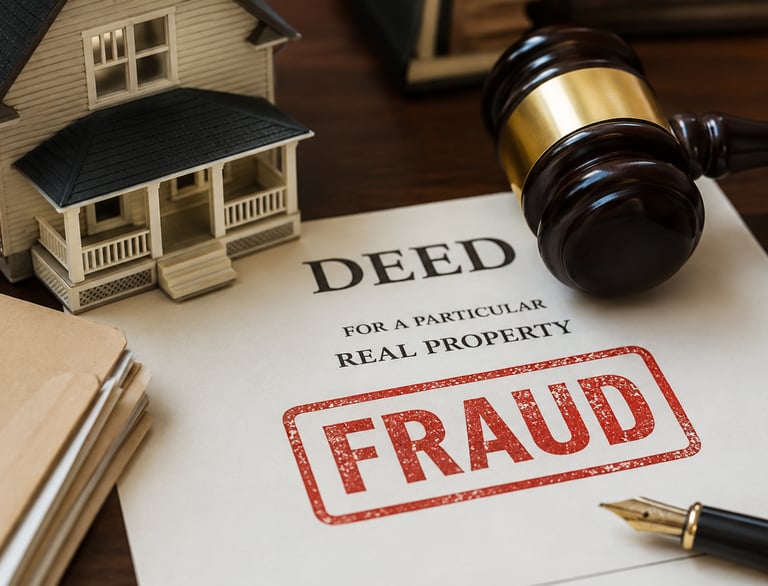
Real estate fraud is one of the most damaging financial crimes facing Florida property owners, families, investors, and attorneys. In many cases, the fraud does not begin with a dramatic break-in or obvious theft. It begins quietly, with a document filed in the public record, a suspicious deed transfer, a forged signature, a questionable notary stamp, or a person claiming rights to property they do not legally own.
In Florida, where real estate values remain high and many properties are owned by retirees, absentee owners, estates, investors, and out-of-state residents, property fraud can move quickly. A fraudulent deed or false filing can create legal chaos, cloud title, delay a sale, interfere with probate, or trigger expensive litigation. By the time the victim discovers the issue, the fraudulent actor may have already attempted to sell, mortgage, lease, or transfer the property.
At PMI, real estate fraud investigations focus on the facts behind the paperwork. A document may appear valid on its face, but the investigative question is deeper: who prepared it, who signed it, who benefited from it, what changed hands, and whether the transaction is supported by a lawful chain of evidence.
Common Forms of Real Estate Fraud
Real estate fraud can take several forms. Some schemes involve a forged deed that transfers property from the lawful owner to another person or entity. Others involve quitclaim deed abuse, fake powers of attorney, fraudulent notarial acts, identity theft, straw buyers, mortgage fraud, fraudulent liens, or false documents recorded against the property.
Florida law specifically addresses the unlawful filing of false documents or records against real or personal property under Florida Statute § 817.535. The statute applies to certain instruments filed in official records that contain materially false, fictitious, or fraudulent statements or representations. It also provides a civil cause of action for a person adversely affected by such an instrument, regardless of whether criminal charges are pursued.
For property owners, this is critical. A fraudulent filing can do real damage even before a criminal case is opened. It can cloud title, interfere with ownership rights, and force the legitimate owner to take action to restore clear title.
Red Flags of Real Estate Fraud
Real estate fraud often leaves behind warning signs. Some of the most common indicators include:
sudden deed transfers involving elderly or vulnerable property owners;
quitclaim deeds filed shortly before or after a death;
property transferred to a new person, company, or trust without clear explanation;
suspicious notary information;
signatures that appear inconsistent with prior documents;
transfers for little or no consideration;
deeds signed while the owner was hospitalized, incapacitated, incarcerated, or out of state;
unknown individuals claiming ownership rights;
unexpected liens or encumbrances;
corporate entities created shortly before the transfer;
family members excluded from property decisions without explanation;
property sold or listed without the true owner’s knowledge.
These red flags do not automatically prove fraud. However, they are indicators that the transaction requires further investigation.
Why Real Estate Fraud Requires an Investigation
Real estate fraud is rarely proven with one document. A meaningful investigation often requires a full review of the timeline, public filings, signatures, notarial details, witnesses, property records, corporate records, probate filings, civil litigation, communications, and financial motive.
A private investigator can assist attorneys, property owners, heirs, and businesses by developing a factual record. That may include identifying involved parties, locating witnesses, reviewing public records, documenting suspicious filing patterns, comparing known signatures, mapping the chain of title, and identifying connections between the people and entities involved.
PMI does not determine legal ownership. That is a legal issue for attorneys, courts, title companies, and insurers. PMI’s role is to investigate the facts, locate evidence, document inconsistencies, and support attorneys with intelligence that can be used to pursue civil remedies, criminal complaints, injunctions, title actions, probate litigation, or insurance claims.
The Importance of Acting Quickly
Time matters. Once a fraudulent deed or false filing appears in the public record, the fraud can continue to spread. The property may be sold, refinanced, leased, transferred again, or used as collateral. A delay can make it harder to identify witnesses, recover documents, preserve communications, or stop further damage.
If a property owner discovers a suspicious deed, unexpected lien, questionable transfer, or unexplained public filing, the first step should be to contact an attorney. The second step should be to begin a professional investigation to preserve evidence and determine what happened.
How PMI Assists in Real Estate Fraud Matters
PMI can assist with real estate fraud investigations involving:
suspicious deed transfers;
forged signatures;
quitclaim deed abuse;
false liens;
fraudulent notary issues;
elder exploitation involving property;
probate and heirship disputes;
shell companies and straw buyers;
ownership and occupancy verification;
public records research;
litigation support for attorneys.
Real estate fraud is not just a paperwork problem. It is often a coordinated act involving identity, motive, opportunity, and financial gain. PMI investigates beyond the document to identify the people, timeline, and evidence behind the filing.
In Florida, real estate fraud can cause devastating financial and legal consequences. A fraudulent deed, false filing, or suspicious transfer can threaten ownership rights, damage families, and create complex litigation. The sooner the facts are investigated, the better the chance of protecting the property and identifying those responsible.
PMI provides investigative support for attorneys, property owners, families, investors, and businesses facing suspected real estate fraud. When the paper trail does not tell the whole story, PMI investigates the facts behind it.